Dreifuerst KT. Using debriefing for meaningful learning to foster development of clinical reasoning in simulation. J Nurs Educ. 2012 Jun; 51(6): 326-33. PMID: 22495923.
Brett-Fleegler M, Rudolph J, Eppich W, Monuteaux, M., Fleegler, E., Cheng, A., Simon, R. Debriefing Assessment for Simulation in Healthcare: Development and Psychometric Properties. Simul Healthc. 2012 Oct; 7 (5): 288-94. PMID: 22902606.
Morse, Catherine J. “The Effect of Debriefing with Good Judgment on Acute Care Nurse Practitioner Students’ Reflective Ability and Perspective Transformation.” [Doctoral dissertation]. Villanova, Pennsylvania: Villanova University, 2012. Retrieved from http://pqdtopen.proquest.com/pubnum/3552408.html.
Kolbe M, Weiss M, Grote G, Knauth A, Dambach M, Spahn DR, Grande B. TeamGAINS: a tool for structured debriefings for simulation-based team trainings. BMJ Qual Saf. 2013 Jul;22(7):541-53. doi: 10.1136/bmjqs-2012-000917. Epub 2013 Mar 22. PMID: 23525093.
Cooper DD, Wilson AB, Huffman GN, Humbert AJ. Medical students’ perception of residents as teachers: comparing effectiveness of residents and faculty during simulation debriefings. J Grad Med Educ. 2012 Dec;4(4):486-9. doi: 10.4300/JGME-D-11-00269.1. PMID: 24294426 . (2014) Erratum: J Grad Med Educ. 2014 March, 6(1):192. https://doi.org/10.4300/1949-8357-6.1.192.
Rudolph J, Raemer D, Simon R. Establishing a safe container for learning in simulation: The role of the pre-simulation briefing. Simul Healthc. 2014 Dec;9(6):339-49. PMID: 25188485.
Jeffries, P. R., Dreifuerst, K. T., Kardong-Edgren, S., & Hayden, J. Faculty Development When Initiating Simulation Programs: Lessons Learned From the National Simulation Study. J Nurs Regul. 2015 Jan; 5(4): 17-23. http://dx.doi.org/10.1016/S2155-8256(15)30037-5.
Policard, F. Optimiser le débriefing d’une séance de simulation en santé. SOiNS CADRES. 2015 May; 24 (94): 51-54. [in French] Retrieved from: http://www.em-consulte.com/article/973285/article/optimiser-le-debriefing-d-une-seance-de-simulation.
Aluisio AR, Daniel P, Grock A, Freedman J, Singh A, Papanagnou D, Arquilla B. Case-based Learning Outperformed Simulation Exercises in Disaster Preparedness Education Among Nursing Trainees in India: A Randomized Controlled Trial. Prehosp Disaster Med. 2016 Oct;31(5):516-23. PMID: 27491847.
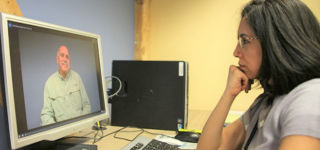
Ahmed RA, Atkinson SS, Gable B, Yee J, Gardner AK. Coaching From the Sidelines: Examining the Impact of Teledebriefing in Simulation-Based Training. Simul Healthc. 2016 Oct;11(5):334-339. PMID: 27388866.
Evain JN, Zoric L, Mattatia L, Picard O, Ripart J, Cuvillon P. Residual anxiety after high fidelity simulation in anaesthesiology: An observational, prospective, pilot study. Anaesth Crit Care Pain Med. 2017 Aug;36(4):205-212. PMID: 27867134.
Bullard MJ, Leuck JA, Howley LD. Unifying interdisciplinary education: designing and implementing an intern simulation educational curriculum to increase confidence in critical care from PGY1 to PGY2. BMC Res Notes. 2017 Nov 6;10(1):563. PMID: 29110695.
Adams T, Newton C, Patel H, Sulistio M, Tomlinson A, Lee W. Resident versus faculty member simulation debriefing. Clin Teach. 2017 Nov 16. PMID: 29144023.
Durand C, Secheresse T, Leconte M. The use of the Debriefing Assessment for Simulation in Healthcare (DASH) in a simulation-based team learning program for newborn resuscitation in the delivery room. Arch Pediatr. 2017 Dec;24(12):1197-1204. [in French]. PMID: 29174008.
Roh YS, Jang KI. Survey of factors influencing learner engagement with simulation debriefing among nursing students. Nurs Health Sci. 2017 Dec;19(4):485-491. doi: 10.1111/nhs.12371. Epub 2017 Aug 29. PMID: 28851087.
Gordon RM. Debriefing Virtual Simulation Using an Online Conferencing Platform: Lessons Learned. Clin Simul Nurs. 2017 Dec; 13(12): 668-674. http://dx.doi.org/10.1016/j.ecns.2017.08.003.
Poland S, Frey JA, Khobrani A, Ondrejka JE, Ruhlin MU, George RL, Gothard MD, Ahmed RA. Telepresent Focused Assessment With Sonography for Trauma Examination Training Versus Traditional Training for Medical Students: A Simulation-Based Pilot Study. J Ultrasound Med. 2018 Feb 1. PMID: 29388234.
Kang K, Yu M. Comparison of student self-debriefing versus instructor debriefing in nursing simulation: A quasi-experimental study. Nurse Educ Today. 2018 Jun;65:67-73. doi: 10.1016/j.nedt.2018.02.030. Epub 2018 Mar 2. PMID: 29533836.
Doherty-Restrepo J, Odai M, Harris M, Yam T, Potteiger K, Montalvo A. Students’ Perception of Peer and Faculty Debriefing Facilitators Following Simulation- Based Education. J Allied Health. 2018 Summer;47(2):107-112. PMID: 29868695.
Brown DK, Wong AH, Ahmed RA. Evaluation of simulation debriefing methods with interprofessional learning. Interprof Care. 2018 Jul 19:1-3. doi: 10.1080/13561820.2018.1500451. PMID: 30024297.
Ciullo A, Yee J, Frey JA, Gothard MD, Benner A, Hammond J, Ballas D, Ahmed RA. Telepresent mechanical ventilation training versus traditional instruction: a simulation-based pilot study. BMJ Simul Technol Enhanc Learn. 2018 Nov 29;5(1):8-14. doi: 10.1136/bmjstel-2017-000254. PMID: 35517909; PMCID: PMC8936854.
Adams T, Newton C, Patel H, Sulistio M, Tomlinson A, Lee W. Resident versus faculty member simulation debriefing. Clin Teach. 2018 December; 15(6): 462–466. PMID: 29144023.
Kim SS, De Gagne JC. Instructor-led vs. peer-led debriefing in preoperative care simulation using standardized patients. Nurse Educ Today. 2018 Dec;71:34-39. PMID: 30218850.
Jeffers JM, Poling S. The development and implementation of a 12-month simulation-based learning curriculum for pediatric emergency medicine fellows utilizing debriefing with good judgment and rapid cycle deliberate practice. BMC Med Educ. 2019 Jan 15;19(1):22. doi: 10.1186/s12909-018-1417-6. PMID: 30646903.
Alcaraz-Mateos E, Jiang XS, Mohammed AAR, Turic I, Hernández-Sabater L, Caballero-Alemán F, Párraga-Ramírez MJ, Poblet E. A novel simulator model and standardized assessment tools for fine needle aspiration cytology training. Diagn Cytopathol. 2019 Apr;47(4):297-301. doi: 10.1002/dc.24105. Epub 2018 Nov 25. PMID: 30474299.
Tanoubi I, Labben I, Guédira S, Drolet P, Perron R, Robitaille A, Géorgescu M. The impact of a high fidelity simulation-based debriefing course on the Debriefing Assessment for Simulation in Healthcare (DASH)© score of novice instructors. J Adv Med Educ Prof. 2019 Oct;7(4):159-164. doi: 10.30476/JAMP.2019.74583.0
Houzé-Cerfon CH, Boet S, Saint-Jean M, Cros J, Vardon-Bounes F, Marhar F, Couarraze S, Der Sahakian G, Mattatia L, Nicolle L, Balen F, Charpentier S, Bounes V, Geeraerts T. Effect of combined individual-collective debriefing of participants in interprofessional simulation courses on crisis resource management: a randomized controlled multicenter trial. Emergencias. 2020 Abr;32(2):111-117. English, Spanish. PMID: 32125110.
Raney JH, Medvedev MM, Cohen SR, Spindler H, Ghosh R, Christmas A, Das A, Gore A, Mahapatra T, Walker D. Training and evaluating simulation debriefers in low-resource settings: lessons learned from Bihar, India. BMC Med Educ. 2020 Jan 8;20(1):9. doi: 10.1186/s12909-019-1906-2. PMID: 31914989; PMCID: PMC6951007.
Wiggins LL, Sarasnick J, Siemens NG. Using Simulation to Train Medical Units for Deployment. Mil Med. 2020 Mar 2;185(3-4):341-345. doi: 10.1093/milmed/usz427. PMID: 31868911.
Zhang H, Wang W, Goh SHL, Wu XV, Mörelius E. The impact of a three-phase video-assisted debriefing on nursing students’ debriefing experiences, perceived stress and facilitators’ practices: A mixed methods study. Nurse Educ Today. 2020 May 1;90:104460. doi: 10.1016/j.nedt.2020.104460. Epub ahead of print. PMID: 32408245.
Muller-Botti S, Maestre JM, del Moral I, Fey M; Simon R. Linguistic Validation of the Debriefing Assessment for Simulation in Healthcare in Spanish and Cultural Validation for 8 Spanish Speaking Countries. Simulation in Healthcare: The Journal of the Society for Simulation in Healthcare 2020 Jun 11; Volume Publish Ahead of Print – Issue – doi: 10.1097/SIH.0000000000000468. PMID: 32541578.
Zargham S, Hanson A, Laniewicz M, Sandquist M, Kessler DO, Gilbert GE, Calhoun AW. Psychometric Testing of the Debriefing Assessment for Simulation in Healthcare (DASH) for Trainee-led, In Situ Simulations in the Pediatric Emergency Department Context. AEM Educ Train. 2020 Jun 17;5(2):e10482. doi: 10.1002/aet2.10482. PMID: 33842804; PMCID: PMC8019148.
Coggins A, Marchant D, Bartels J, Cliff B, Warburton S, Murphy M, Mitra T, Ryan CJ. Simulation-based medical education can be used to improve the mental health competency of emergency physicians. Australas Psychiatry. 2020 Jun;28(3):354-358. doi: 10.1177/1039856220901480. Epub 2020 Feb 24. PMID: 32093504.
Gross IT, Whitfill T, Auzina L, Auerbach M, Balmaks R. Telementoring for remote simulation instructor training and faculty development using telesimulation. BMJ Simul Technol Enhanc Learn. 2020 May 18;7(2):61-65. doi: 10.1136/bmjstel-2019-000512. PMID: 35520375; PMCID: PMC8936763.
Roncallo HR, Ray JM, Kulacz RC, Yang TJ, Chmura C, Evans LV, Wong AH. An Interprofessional Simulation-Based Orientation Program for Transitioning Novice Nurses to Critical Care Roles in the Emergency Department: Pilot Implementation and Evaluation. Jt Comm J Qual Patient Saf. 2020 Nov;46(11):640-649. doi: 10.1016/j.jcjq.2020.08.005. Epub 2020 Aug 16. PMID: 32919910; PMCID: PMC7606488.
Anderson, M., Díaz, D.A., Talbert, S., Gonzalez, L., Spears, S., Keiffer, M., Guido-Sanz, F., Mills, H., Hill., P., & Welch, G. (2021). Exploration of a capture and analysis system to identify what a good debriefer looks like. Abstracts Presented at the 21st Annual International Meeting on Simulation in Healthcare, January 19–March 31, 2021, Simulation in Healthcare, 16(3), e61. https://doi.org/10.1097/SIH.0000000000000588
Glatts L, Clark N, Clarke S, Fukuyama K. Student Perspectives of Interprofessional Group Debriefing: Use of the National League for Nursing Guide for Teaching Thinking. Nurs Educ Perspect. 2021 Jan/Feb 01;42(1):36-38. doi: 10.1097/01.NEP.0000000000000617. PMID: 31851137.
Rueda-Medina B, Schmidt-RíoValle J, González-Jiménez E, Fernández-Aparicio Á, Encarnación Aguilar-Ferrándiz M, Correa-Rodríguez M. Peer Debriefing Versus Instructor-Led Debriefing for Nursing Simulation. J Nurs Educ. 2021 Feb 1;60(2):90-95. doi: 10.3928/01484834-20210120-06. PMID: 33528579.
Couto TB, Matos FM, de Toledo Rodovalho PD, Fey M, Simon, R, Muller-Botti S. Translation of the Debriefing Assessment for Simulation in Healthcare in Portuguese and cross-cultural adaptation for Portugal and Brazil. Adv Simul. 6, 25 (2021). https://doi.org/10.1186/s41077-021-00175-z. PMID: 34233758.
Rojo E, Maestre JM, Piedra L, Esteban J, Sánchez B, Hoz V, Del Moral I. Entrenamiento de equipos interprofesionales con simulación in situ para mejorar la calidad de la reanimación cardiopulmonar [Interprofessional team training with in situ simulation to improve the quality of cardiopulmonary resuscitation]. J Healthc Qual Res. 2021 Nov 22:S2603-6479(21)00099-3. Spanish. doi: 10.1016/j.jhqr.2021.10.001. https://doi.org/10.1016/j.jhqr.2021.10.001. PMID: 34824042.
Maestre JM, García-Camarero T, Veiga G, Holanda MS, Alonso H, Fradejas V, Piedra L, Rojo E. Guía práctica para el debriefing online: revisión exploratoria y análisis de cursos con simulación clínica a distancia [A practical guide to online debriefing: A scoping review and analysis of distance-based simulation programs]. Educación Médica. 2021 Nov-Dec; 22(6):330-339. doi: 10.1016/j.edumed.2021.07.002.
Olvera-Cortés HE, Hernández-Gutiérrez LS, Scherer-Castanedo E, Ramírez-Arias JD, Argueta Muñoz FD, Gutiérrez-Barreto SE. Who Can Debriefing Assessment for Simulation in Healthcare? Different Perspectives on Teledebriefing Assessments, Simulation in Healthcare: The Journal of the Society for Simulation in Healthcare: February 8, 2022 – Volume – Issue – doi: 10.1097/SIH.0000000000000642.PMID: 35136006.
Coggins, A., Hong, S. S., Baliga, K., & Halamek, L. P. (2022). Immediate faculty feedback using debriefing timing data and conversational diagrams. Advances in simulation (London, England), 7(1), 7. https://doi.org/10.1186/s41077-022-00203-6.PMID: 35256014.